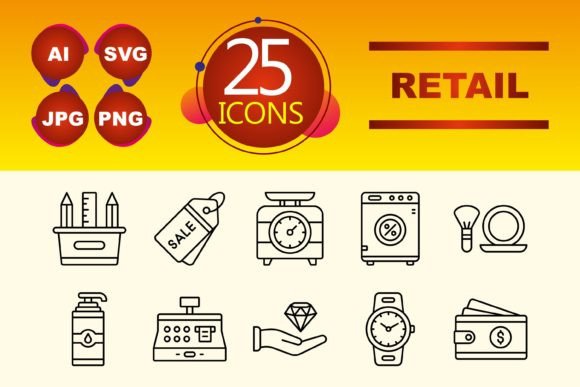
Retail Icons for Embroidery Projects
First Impressions of Retail Icons
When I first saw the Retail icon set, I was struck by its clean and modern feel. The line style gives it a minimalist appearance that’s both versatile and professional. These icons have a subtle geometric edge, which makes them feel contemporary without being too abstract. They’re not overly detailed, but they carry enough character to stand out on fabric.
The mood they create is one of simplicity and clarity. It feels like a design meant for quick recognition—perfect for small business branding or digital interfaces. But what caught my attention most was how these icons could translate into embroidery. Their flat, vector-based structure suggests that they’d stitch cleanly with minimal distortion, especially when using satin or running stitches.
How Retail Icons Perform in Real-Life Embroidery
I recently used a similar set of icons for a custom embroidered tote bag for a boutique client. The result was impressive—clean lines, sharp edges, and a professional finish. With Retail, I imagine they’d look great on products like custom apparel, sweatshirts, tote bags, patch designs, and even nursery decor. For example, an icon representing a shopping cart could be a subtle yet stylish addition to a baby onesie or a personalized gift for a small shop owner.
Their adaptability is another plus. Whether you're designing a holiday gift, a personalized product, or commercial embroidery for a client, these icons can easily fit into a wide range of themes. I can see them working well as part of a larger motif, like a storefront scene or a branded logo on apparel decorators’ work.
For Etsy sellers or craft business owners, this set would be a valuable asset. It could be used in printable mockups or digital product previews to showcase their offerings. The clean lines make them ideal for handmade products that need to maintain a cohesive visual identity.
Where to Use Retail Icons with Caution
While these icons are versatile, there are certain situations where extra care is needed. On small hoop sizes, the detail might get lost, so it's important to review the design at scale before finalizing. If you're working with textured fabrics, thin fabric, or stretchy materials, consider using a proper stabilizer to ensure the stitches hold up.
Icons with intricate corners or tiny lettering may not render as clearly on dark fabric backgrounds. Testing the embroidery file in black and white mockups is a good idea to check contrast and clarity. Also, if you plan to use them on curved surfaces like caps or layered garments, adjust the placement and stitching density accordingly.
For commercial embroidery projects, always confirm licensing terms before selling finished items or digital embroidery files. This will help avoid any legal issues down the line.
Design Notes for Embroidery Success
Before committing to using Retail in your next project, take some time to test it on scrap fabric. Check how the thread colors interact with your chosen fabric texture. Review the stitch density and make sure it’s appropriate for the garment or item you're working on. Confirm the hoop size required and inspect all small details to ensure they’ll stitch properly.
Testing the design in black and white mockups can also help you understand how it’ll look on different fabric backgrounds. Compare light and dark options to see which provides the best visibility and contrast. Using the right stabilizer is key, especially if you're working with delicate or stretchy fabrics.
Finally, always verify whether the design works for both personal and commercial projects. If you're planning to sell your finished products or offer them as design assets, double-check the licensing agreement to ensure you're within your rights to do so.
Final Thoughts on Retail Icons
Retail has the potential to be a valuable addition to your embroidery toolkit. Its clean, modern aesthetic fits well with a variety of embroidery projects, from personalized gifts to small shop products. Whether you're creating custom apparel, embroidered patches, or handmade merchandise, these icons can add a touch of professionalism and visual appeal.
With thoughtful preparation and testing, Retail can elevate your work and help you deliver high-quality, customer-approved results. As always, remember to treat each design as a unique challenge—because every fabric, thread color, and stitch count tells its own story.